“I don’t feel the same anymore. What used to be butterflies turned into something rotten. Every time his eyes landed on me, my stomach twisted like it was trying to vomit itself out. Even when I wasn’t looking at him, my skin felt it, his presence crawling over me, gripping my throat. A lump would rise and I couldn’t breathe, couldn’t swallow. It wasn’t hate. Hate requires energy, and he wasn’t worth that. What I felt was disgust. Yes, disgust. The kind that hits your entire body at once. He smelled like wild lemongrass growing along a dusty, forgotten murram road in the middle of nowhere, a smell that could have been pleasant but ruined. Ruined by the stench of human piss and shit soaking the soil, the kind men spray everywhere with their manhood hanging out for the world to see. No shame. No hesitation. Just polluting earth and air like animals marking territory. That foul mix of sour urine, shit, dust, and heat, that’s what he smelled like to me.”
“Mmmh… okay… um… wow,” she said, blinking hard, clearly rattled. “Those are… very specific feelings.”
“It has to be. Your body must reject something down to the bone. You must feel the stench before you smell it. The sourness stings your eyes just from being close to it. Every tiny hair on your skin rises to warn you:this thing should never touch you. That is the kind of disgust I feel when I think of him.”
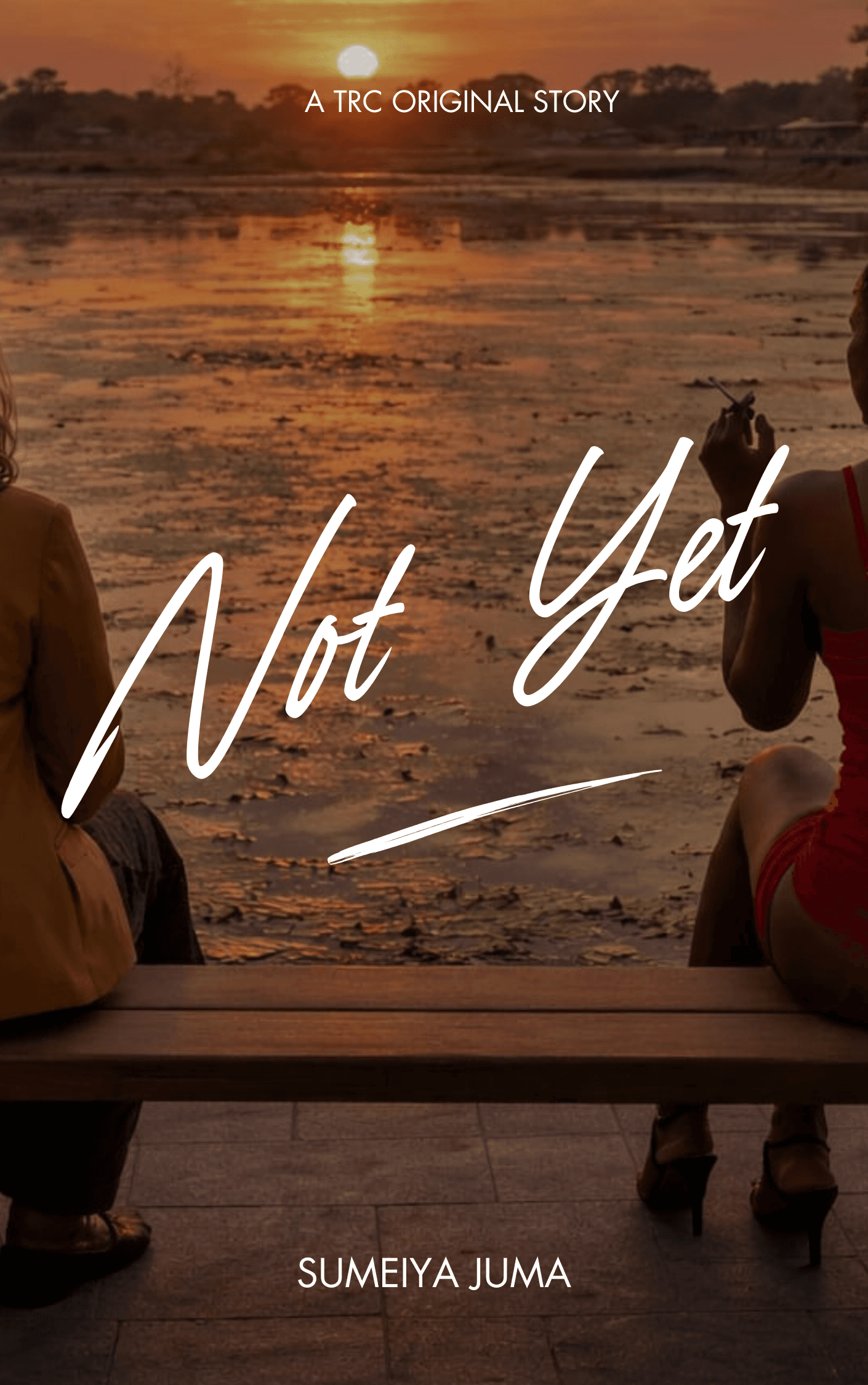
A violent gust of wind blew through the park, tearing through the stillness before the words could settle. The air was cold for a Sunday afternoon. The two women sat on a rusting bench facing a neglected pond in the heart of the city. No one came here anymore. There was nothing beautiful or peaceful about it, only duckweed choking the surface, the water green and slimy. Even frogs avoided it. Mosquitoes didn’t bother breeding here. The place smelled like spinach forgotten inside a plastic bag for days—sour, wet and decaying.
None of this bothered the two women. They shared the bench, separated by a small space and decades of life experience, the weight of time resting differently on each of their shoulders. One carried the ache of time wasted. The other, the trembling fear of time slipping.
“Is that why you chose to remain alone all this time?” the younger woman finally asked.
The older woman turned slowly to look at her. The girl was young, but her eyes were exhausted, bruised by life. There was a dormant volcano behind them, muted but hot enough to erupt. She was thin, almost starved-looking, her bones shaping her clothes instead of fabric shaping her body. Her shoulders poked through the silk of her top. A cheap blonde wig sat awkwardly on her head. Her face covered in mild makeup, marked by constellations of old acne scars. She wasn’t ugly. Just tired. And she drank too much, the smell of cheap liquor clung to her like a second skin, mixing with sweat. The older woman had been trying not to judge, but the scent was impossible to ignore. Every so often, she rubbed her nose to keep from reacting.
“Alone?” the older woman repeated, a low scoff in her voice. “You think that means lonely?”
“Well… yes. If language hasn’t changed, that’s exactly what it means.”
“Self-respect,” the old woman said plainly, “is why I stay alone. It’s why I haven’t let a man touch me in forty years.”
“I still don’t understand how you did that.” The girl practically levitated off the bench. “Forty years? I am honestly curious, I didn’t want to pry when you said you’ve been celibate for a long time, but forty years is a stretch!”
“It wasn’t always like this,” she began, licking her lips as if tasting the memory before speaking.
“He was… how do I put it… electrifying to me. He scrambled my sense of right and wrong. He was the only man who ever made my knees buckle. We met in my father’s compound. He had come with his cousin to tend to my father’s horses.”
“Your father had horses? Oh ma’am, you were kaching rich!”
“Call me Levy. Ma’am makes me feel like an old office manager who’s worked the same job for thirty years and now thinks she owns the place.”
“Alright, Levy. I’m Zen. Pleasure to finally know your name.”
She chuckled as she unzipped her handbag, pulled out a bottle of cheap Chrome gin, and offered it. Levy politely shook her head. Zen took a heavy gulp without flinching. The smell alone made Levy’s nose twitch, but she kept her thoughts to herself.
“I was not rich,” Levy continued. “My father was.Was. He died shortly after I married my ex-husband. Some blame me for giving him a heart attack when he found out. Their claims hold no water. The man was already ailing long before I was even born.”
“You don’t seem to like your dear daddy either, huh?”
“As I said, hate isn’t something you waste on people. I reserve that for Satan, the one who will apparently burn us all in hell for living life as we wish.”
Zen burst into laughter, choking on her drink. “I didn’t take you for the religious type! You keep surprising me,eeh!”
A thin smile flickered across Levy’s face, but she ignored the remark and waded back into her memories.
“I fell in love with him the moment I saw him. He wasn’t the type described in romance books. He wasn’t tall, dark, and handsome, just… average. Average height, average features, a little bulky. But his skin…” she exhaled softly, “…his skin was night that illuminated the day. A deep, rich melanin that glistened under the sun the way a slow river glitters at noon. And his teeth, white, the front two slightly bucked and leaning into each other. They should’ve made him look odd, but when he smiled…” She drifted for a moment, lost in the image. “They were beautiful.”
She could still see him: the short coils peeking through his neatly trimmed black hair, the hair on his chest curling through his shirt, the sweat that glistened along his forehead, collarbone, and underarms as he mucked the stables.
“Watching him awakened something in me. A tingling low in my belly. A warmth that gathered and settled between my thighs. It terrified and thrilled my seventeen-year-old self.”
Zen studied her face, hoping to catch a blush or youthful sparkle. But Levy’s expression remained composed, only her lips moved as she spoke. Zen took in the woman beside her: a head of soft monochrome curls, neatly oiled and glistening, a face lined with age yet firm and unscarred, clay-brown skin that looked almost sculpted, eyes pale and eerie, ringed with a fading blue like a dying flame, posture poised, scent of vanilla, coconut, and a touch of sandalwood. Middle-class clothes, but she carried herself like old money.
“He was your first?” Zen asked.
“He was my only,” Levy replied. “I remember that day like it was yesterday. We had grown close. I noticed he loved to read. I didn’t care for books, but to be near him, I pretended. I would sit outside the stables under the guava tree with a book open, waiting.”
“What book?” Zen asked, suddenly invested.
“Things Fall Apart. Achebe. My school prescribed it. I went to an international school, he didn’t. He said he preferred local and African writers. He was readingA Man of the People at the time. That’s how our first conversation began, books. He adored the arts. When he spoke about stories, his voice deepened, his hands moved, and his arms flexed. My inner thighs would throb and at night I would lie awake, heart racing at the thought of him.”
“Oh, he made you want to be naughty eeh?!” Zen cackled.
Levy allowed the smallest smile.
“That he did. Although at the time I didn’t understand what all that was. I was raised by an elderly nanny, the closest thing I had to a mother after mine ran away with her lover when I was six. My father never remarried.”
“Your mother was savage! The D must have been banging! Forgive my French, but for her to just up and go? Desire can drive you mad, I know that for sure! Do you mind?” she asked, cigarette already between her lips.
Levy waved permission. Zen lit it.
“Desire does drive us mad,” Levy said. “Because after months of longing, he finally had me. On a Sunday morning. All the workers had gone to church. We met in the stables.”
Her voice softened,“It hurt at first. I trusted him, so I let him in. My body was clumsy, curious, aching. I felt a sting, then a little snap, and suddenly the pain melted. And I wanted more.”
She looked out across the pond, as if seeing the stables again.
“Sundays became ours. For six months until I turned eighteen, we explored each other. And we were never caught.”
The topic of intimacy as an emotion meant nothing to Zen.
To her, it was a transaction.
Men chased, gifted, rehearsed emotional intelligence long enough to gain access. Women curated expectations. Gifts, attention and commitment to dress the exchange in sophistication. The world called it companionship, love and partnership. Zen knew better. At the end of it all, it was always a trade.
She made sure she got her time’s worth.
In any currency, as long as it added zeros to her account.
Earlier the same day, Zen had noticed the woman before she spoke to her.
The bench was too quiet for a public park, the kind of quiet that invited conversation or discomfort. Zen was not built for silent sitting. Silence made people suspicious. Silence made them think you wanted something for free.
She shifted, crossed one leg over the other, then finally turned.
“You look tense,” Zen said. “I know a few ways to help people relax.”
Levy glanced at her, unbothered. Curious, but not startled.
Zen smiled the smile she used when she was offering a service. Not flirtatious. Not apologetic. Just clear.
“For a fee,” she added. “Gender doesn’t matter.”
Levy studied her for a moment longer than most did. There was no judgment in her gaze, no hunger either. Just assessment.
“That’s kind,” she said finally. “But no.”
Zen blinked. Rejection was not new, but this was… different.
“No?” she repeated, amused. “You don’t look like a ‘no’ kind of woman.”
“How do you know when one is a no or yes woman?” Levy asked calmly. “I’ve been happily celibate for a while.”
Zen let out a short laugh. “Celibacy eeh?”
She shook her head. “That’s not celibacy, that’s a lifestyle choice.”
Levy smiled faintly. “I suppose it is.”
“So you don’t enjoy pleasure at all?” Zen asked, half-mocking, half-intrigued. “No craving? No itch?”
“Carnal pleasure,” Levy said carefully, “has never fulfilled me.”
Zen leaned back against the bench, suddenly interested.
“Well,” she said, “that makes two of us.”
Levy raised an eyebrow.
Zen smirked. “Difference is, I still charge for it.”
That was how they began talking.
Back to the present, Zen broke the silence.
“Were you happy?”
“Happy?” Levy shot her a sharp glance. The question seemed foreign, almost rude.
“Yes! Happy with him. When he finally married you.”
“I never know how best to reply to that.”
Zen crushed the spent cigarette beneath the red sole of her fake Louboutins and stared at the elderly woman. The conversation had been getting interesting, until it wasn’t. Zen hated riddles. She hated anything that demanded thought without reward. Thinking too much was exhausting. She had never been afforded the luxury of reflection.
“I get happy every time a client pays without a hustle,” Zen said. “When I go home with my face still intact. Body tired, but pockets full.”
Levy stared at her. Her hand lifted, then stopped, as though she had caught herself mid-mistake, and withdrew it into her lap.
“The last time I knew happiness,” Levy said quietly, “was in those stables. After we eloped and married, I had to learn everything.The cooking, cleaning and how to become the woman he wanted. I thought that was what love required, unlearning yourself.
She inhaled slowly.
“Then one night, he asked if he could bring someone else to teach me.”
“To teach you?” Zen scoffed. “Teach you what?”
“How to be the woman he wanted.”
Zen laughed, sharp and humorless. “How? Like the cleaning and cooking shit?”
She reached for another cigarette and lit it.
“Please don’t,” Levy said suddenly. “The smoke is suffocating me.”
“My bad.” Zen put it out immediately.
Levy’s energy shifted. The woman who had spoken so evenly now trembled. Her hands shook, her eyes widened and glazed, as if the memory had dragged her back to a dark place.
We lived in a lower-middle-class area of Nairobi,” Levy continued. “Far from the CBD. Shacks every two blocks. Women sold vegetables by the roadside, kiosks spilling into the street until cars and pedestrians learned to negotiate around them. Butcheries hung pork and beef in white-and-red rooms, some metal, some stone. DVD sellers shouted over each other, hawking voiceover movies in the local language.
Street food vendors stood beside open sewers where garbage, both organic and human mixed freely, as if it belonged there. Women washed clothes near the same scarce water sources people drank from. It didn’t seem to bother them.”
She exhaled.
“At first I wondered how humans could live like that. Then I lived it. I learned to adapt. I learned to wash clothes with my hands. To cook in the same room I slept in. To eat next to trash and swallow without a flinch. The house had space only for a bed, two plastic chairs, and a kerosene stove.”
Zen smiled faintly. What Levy described as suffering was home to her. She had grown up where toilets existed anywhere, where privacy was a rumour. She made it to Form Two before dropping out, when her mother drank herself past responsibility and the younger ones needed feeding. No job paid enough. Hunger did not negotiate.
So Zen used the only currency she owned. And if she didn’t charge for it, they would take it anyway, consent or not.
“I didn’t mind the life,” Levy said. “I got used to the routine. I became part of the community. Until one day…”
Her voice cracked.
“He brought the first teacher home. Makena.”
Levy’s foot tapped the ground rhythmically and vigorously.
“She was young and beautiful, adorned with heaps of makeup and cheap jewelry. Her clothes were vulgar, barely clothing at all. She smelled of alcohol and cheap perfume. The room had one window. Only one. I couldn’t breathe.”
She swallowed hard.
“He made me sit on the plastic chair at the foot of the bed. He held my hand. He said, ‘Sit. Watch. This is how I want to be pleased.’”
Zen’s stomach tightened.
“Makena did things,” Levy said, choking on the words but refusing to stop. “Things I believed only married people did together. Or people who loved each other. She climbed onto him. She opened herself. She moved like she had no bones. She made sounds; loud, obscene sounds that still crawl into my ears and haunt my nights.”
Her voice trembled violently now.
“She rode him. She slapped him. She let him pull her hair. She let him choke her. She let him spit into her mouth. She called him names. She behaved possessed.”
Zen felt bile rise.
“This went on. And on. When he finished, he roared, like an animal after a good hunt. I had never heard him sound like that. Sweat, saliva, and fluids soaked my sheets. My bed. My marriage.”
Levy’s eyes flooded.
“He handed her two hundred shillings. She thanked him. She nodded at me as she left.”
Zen sat frozen.
“He turned to me and said, ‘That’s how I like it. Did you learn something?’”
Levy shook visibly now.
“She wasn’t the only one, there were others. Eighteen in total. I know all their names. He stopped touching me after the sixth. Said it was pointless taking a donkey to the river if it refused to drink.”
Zen opened her mouth. Closed it. She didn’t have the right words. She felt stripped bare. She had been naked before, many times in front of strangers, but never like this. Never with her soul peeled open and hung out for inspection. Never forced to look at herself without armor. The armor that made her survival feel justified. A mirror held by someone else.
“How did you leave?” Zen asked, her voice small.
“I went to buy vegetables,” Levy said. “And I never went back. Since then I haven’t seen or heard from him.”
She stared ahead.
“There was no God for me then. There is none now. I don’t believe in love. Or forgiveness. Or pleasure. Not in the way the world sells them”
Zen didn’t believe in those things either, but for survival. Levy’s disbelief came from refusal.
And suddenly, the thought hit her: brutal, unavoidable.If survival required breaking others, what separated her from men like him? The question shattered her.
“I’m sorry,” she whispered.
“You don’t need to be, it’s not your fault” Levy said sharply. “I find the phrase misused. It pretends to undo what it only names. We throw it around to end discussions, not because it hurt someone else, but because it hurt us. It’s selfish. Permission to keep hurting.”
Suddenly, Zen folded into herself and cried. It was ugly, loud, uncontained. Her body shook. Her face twisted into something raw and unrecognisable. She looked like The Scream by Edvard Munch, except there was no canvas, no museum, no audience to call it art.
“I didn’t know, I didn’t…I could have,” she sobbed. “I thought I had no choice.I had to, I…It…I’m sorry. I’m so sorry.”
The apology was not for Levy.
Levy did not respond. She did not comfort her. She did not look away.
She listened.
As the conversation resigned so did the sun for the day, staining the sky dull orange. The pond before them remained thick and green, unmoved by revelation. Two women sat on a rusting bench, facing water that reflected nothing. One old. One young. Both stripped of illusion.
Neither spoke.
Zen reached into her bag without looking. Her now-trembling fingers brushed against her phone screen. A message popped on the screen, a client, waiting.
She didn’t open it.
It wasn’t a decision. Not yet.
But it was the first time she let it wait.
“In this game of give and take,” Zen said quietly. "I thought I was in control.”
She went quiet. Levy stood and walked away. Zen remained seated. No farewells.
Her thought didn’t finish itself.
It didn’t need to.
Continue your journey through our literary collection
A flooded home, frantic teamwork, playful dogs, and a lesson that turns childhood innocence into hard-earned wisdom.
Through the dark cemetery, whispers called my name; only I could see her shadow smile.
A Nairobi night slips from choma and discipline into inked skin, heavy bass, and bad decisions